
Metal and plastic manufacturing and fabrication to finished goods almost always involves the cutting of raw material. Large sheets or blocks of material must be reduced to “blanks” or “billets” for ease of handling or the finishing process.
Fabricated typically denotes a “blank” that is cut from a flat sheet and formed or shaped by other processes to make a finished part. Billets are typically square blocks of material and are considered “machined”. Here you will find information on the different methods of cutting fabricated and machined parts.
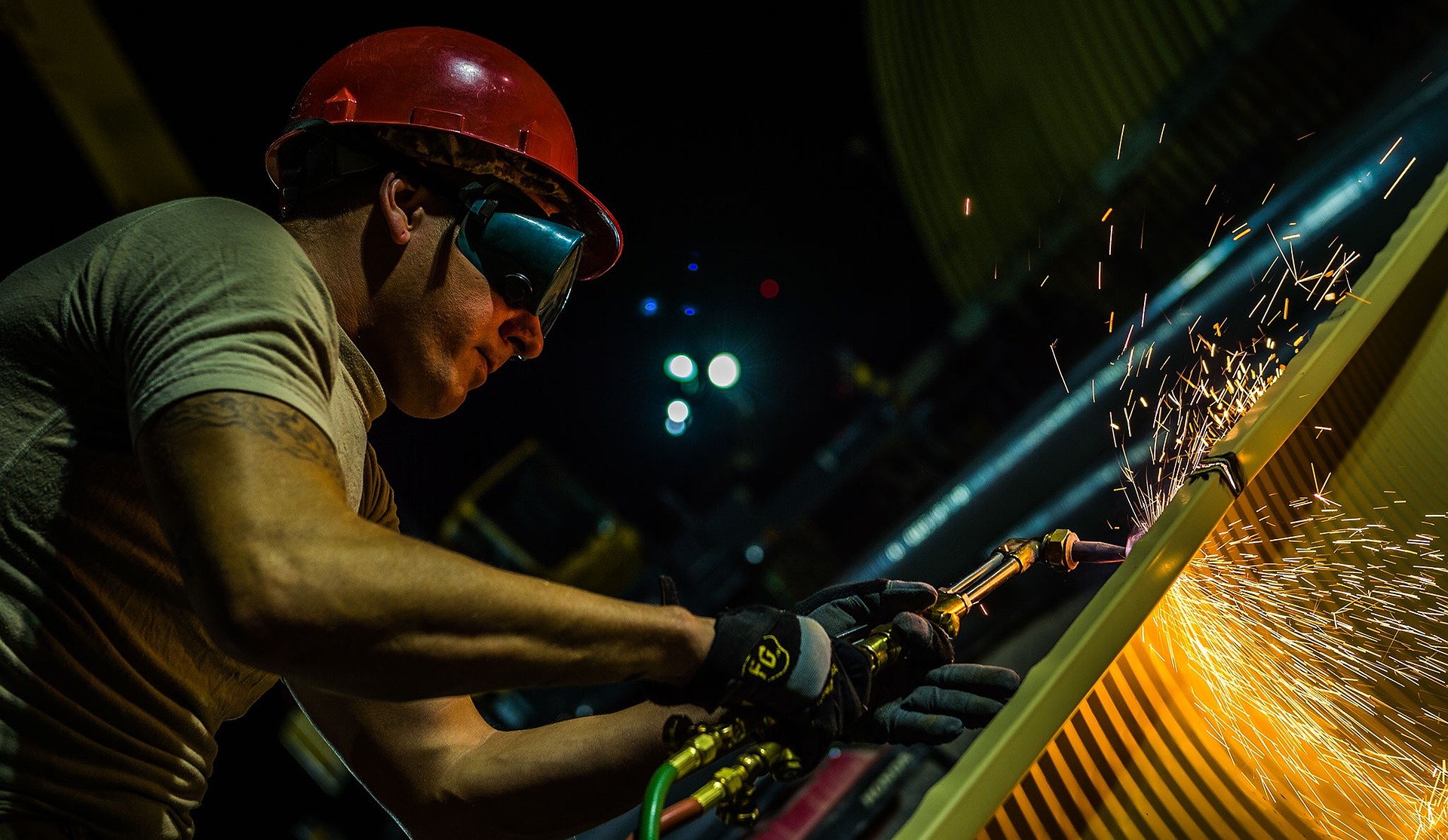
For very thick materials the OXY-Acetelyne torch on an automated cutting table is the fastest way to make rough shapes. The finished edge is quite rough in most cases and requires additional finishing. This is made more difficult because the cut edge is made harder to mill or machine by the process. Very large fabrications like oil wells or military vehicles see products that start on the cutting torch.