




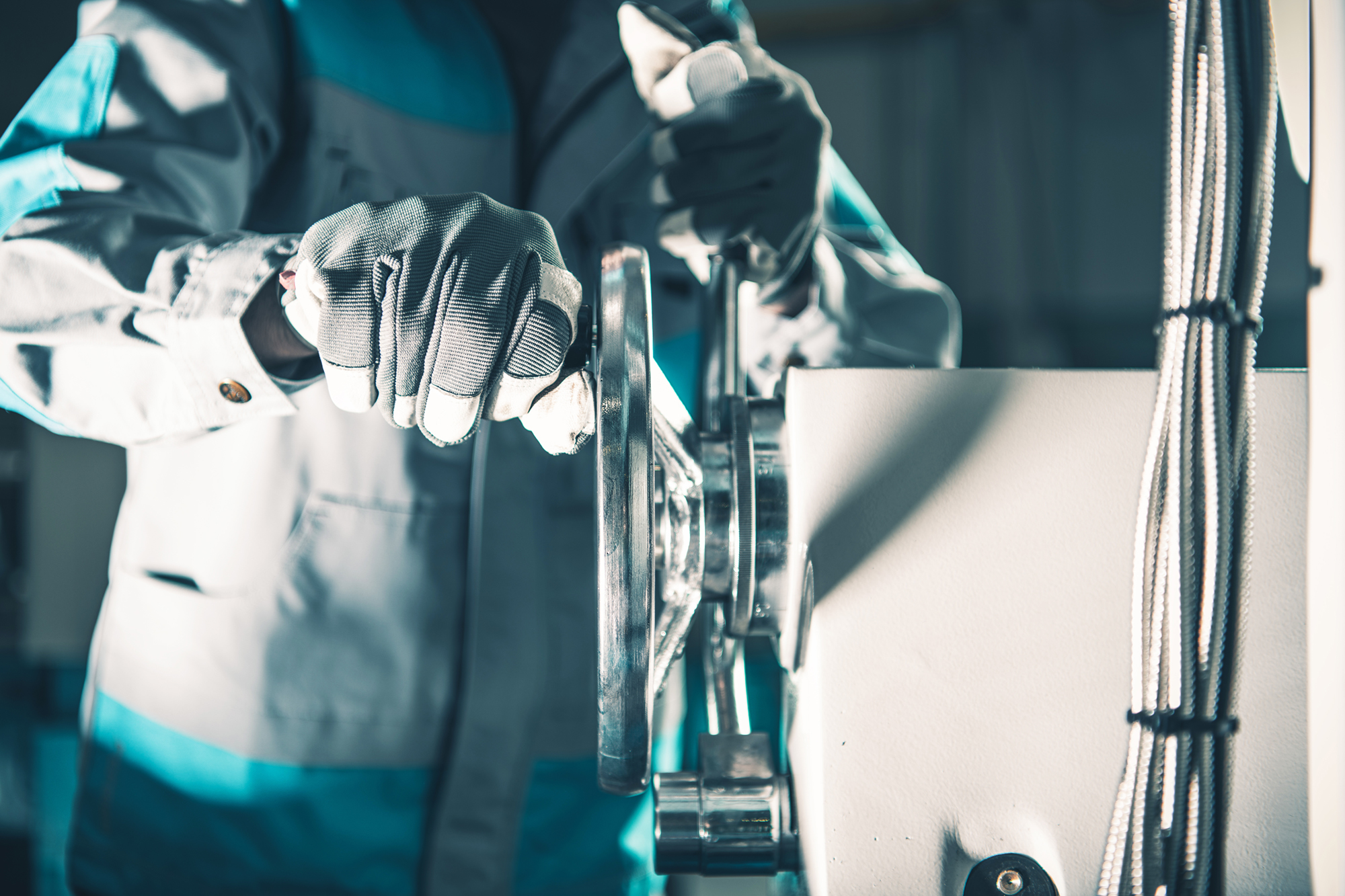
Handwheel Handles
Some handwheels are gently moved by fingers making fine adjustments to everything from medical to measuring devices. Other handwheels are used to turn valves controlling the flow of oil and gas. These handwheels are quite large and require the ability to transmit a lot of force to the wheel to turn it.
Small wheels are utilized for adjustment and require no more than finger force. These are typically made of durable plastic or lightweight metal like aluminum. Larger wheels are typically made of cast iron. Overkill is the name of the game in handwheels. The smallest wheel is far stronger than required and the largest wheels are made to the same intention. When more force is required to overcome adjustment resistance in any type of handwheel, a crank handle can be added to enable more force to be exerted.




Types of Handles
No Handle
No handle handwheels are much like a steering wheel. Which makes it perfect for applications that require a steering motion or used to open and close and revolve.
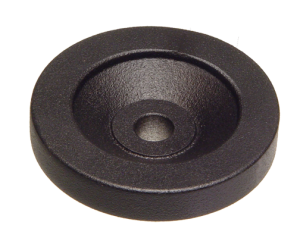
Manual Fold-A-Way
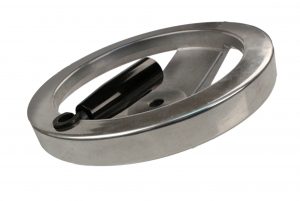
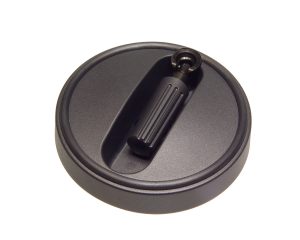
On the manual fold-a-way models, to engage handle, pull up and it will snap into a locked position. The handle will fold-a-way by pulling up on the handle and pushing it into the recessed cavity of the wheel.
Automatic Fold-A-Way
The revolving handle, when pulled from its cavity, is locked into position by the operator pushing the handle axially towards the handwheel. When the axial pressure of the operator ceases, the handle disengages and will automatically fold-a-way into the recessed cavity. These are perfect for handwheels that are in an area where a handle sticking out would be a safety hazard.
Finger Grips
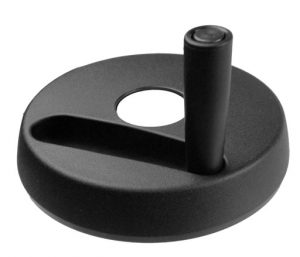
These handwheels can come with or without the added handle. The finger grips are grooved out sections on the perimeter of the wheel. Some are under the wheel and some are facing the hub. The finger grips add extra control to a revolving handle.
Handle Safety
Handle Safety Pocket
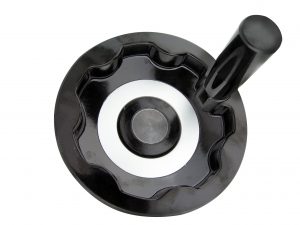
The fold-a-way handle leaves an unobstructed surface because of the safety pocket and rear finger grips give the operator unique control.
Safety Clutch
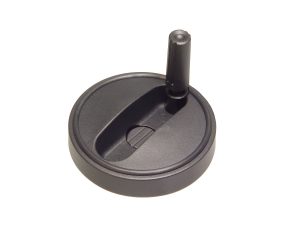
The safety clutch allows the wheel to remain stationary while the shaft turns freely. A clutch is supplied when it is needed in the “pull” position. A slight “pull” on the wheel will engage serrations inside the clutch this inturn forms a positive engagement with the shaft.
When the wheel is released automatically it returns to the stationary position relative to the shaft. The clutch can also be installed in reverse which will engage with a “pushing”. The “pushing” engagement should be used with caution because it can be engaged a lot easier than the “pull”.