Hinge Anatomy
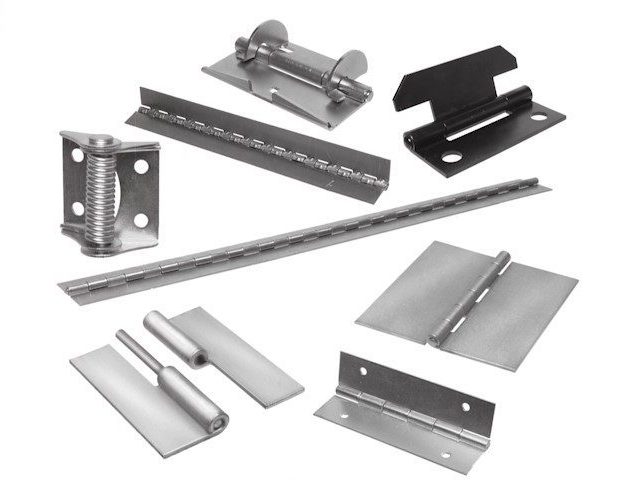
There are many types and styles of hinges. However, they all share the same basic anatomy. In this course, we will guide you through the different parts of a hinge and what each part means.
Pictures From Class
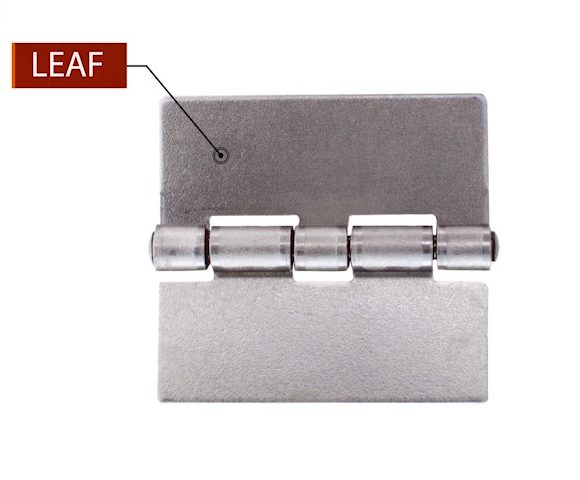 Leaf
Leaf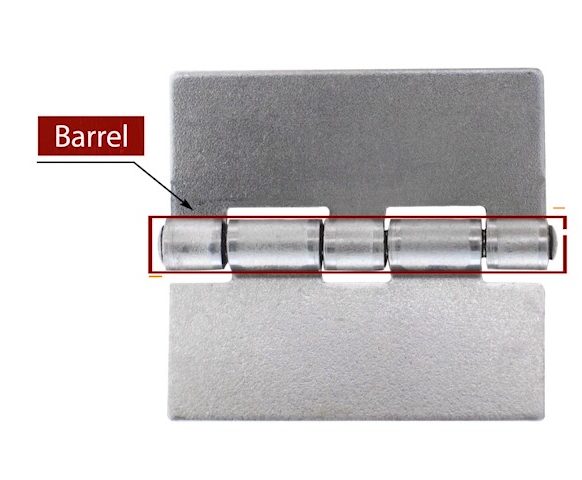 Barrel
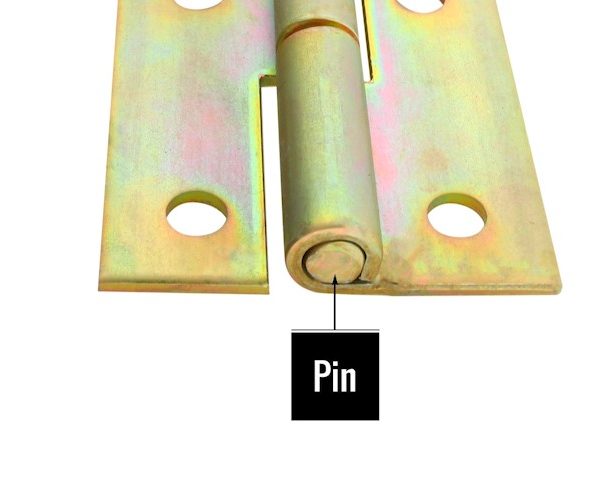 Pin
Pin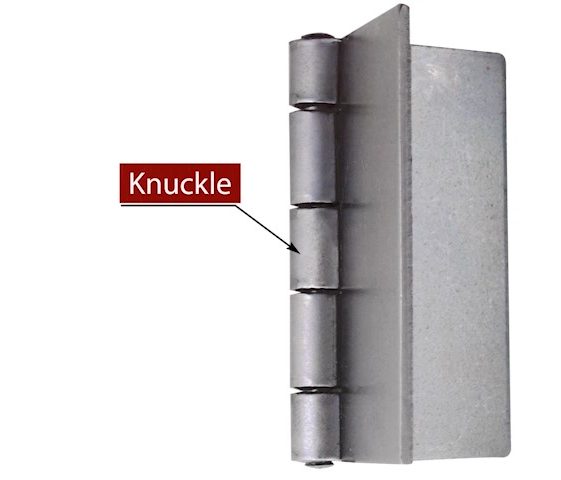 Knuckle
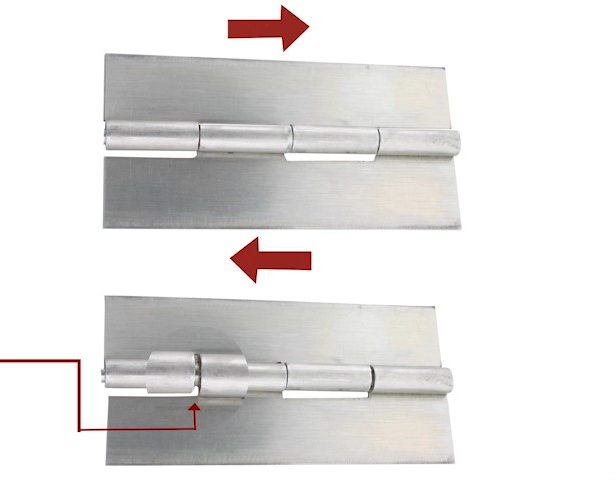 Movement
 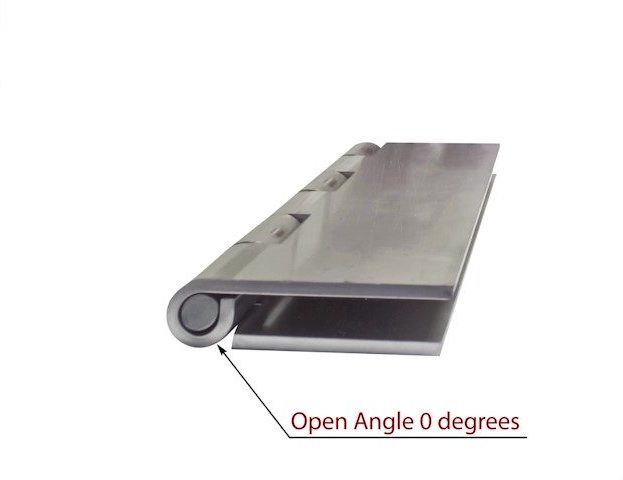 Angles
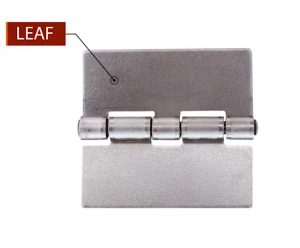
Leaf – The portion of the hinge that extends laterally from the barrel. The leaf generally revolves around the pin.
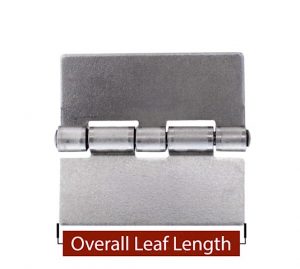
Overall Leaf Length – The length of the leaf as measured parallel to the pin.
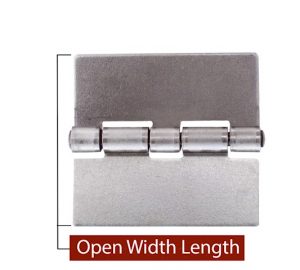
Open Width Length – A overall dimension of the leaves when lying flat and measured perpendicular, or across the pin.
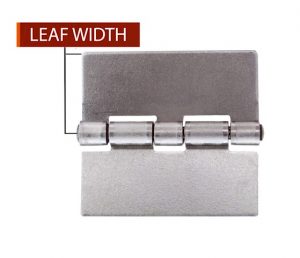
Leaf Width – The dimension from the center of the pin to the outer edge of the leaf.
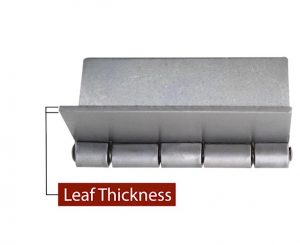
Leaf Thickness – The thickness off the material used for the leaf.
Leaf Material – The type and thickness of metal used for leaf manufacture. The most common raw materials are:
- Cold Rolled Steel
- Stainless Steel
- Brass
- Monel
- Bronze
- Aluminum
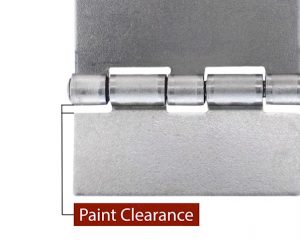
Paint Clearance – The open space between the leaf and the curl of the opposite leaf. If the hinge is painted this allows the paint to remain intact when the hinge operates.
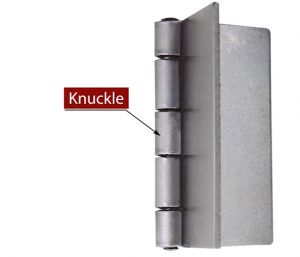
Barrel – The center barrel shape that connects the two leaves. The barrel is broken down into smaller sections called knuckles. Knuckles interlock and wrap around the hinge pin.
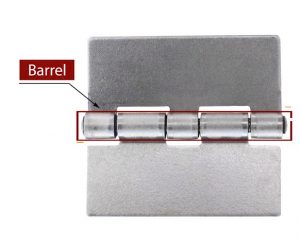
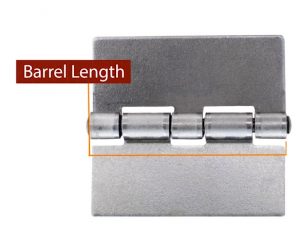
Barrel Length – The dimension of the barrel as measured parallel to the pin
Knuckle – The circular, hallow section of the knuckle of a hinge through which the pin passes.
Also called:
- Knuckle
- Loop
- Joint
- Curl
- Node
Knuckle Length – The length of one section of the barrel.
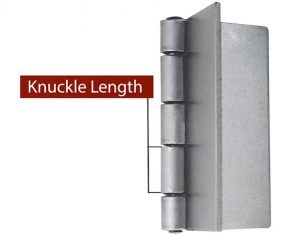
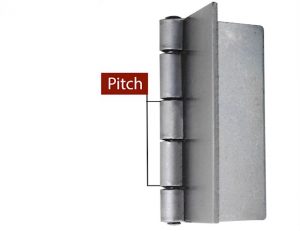
Pitch – The distance from one edge of a knuckle to the same edge on the next knuckle. Resulting in twice the knuckle length.
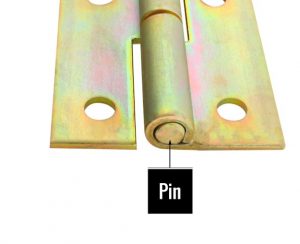
Pin – Rod running the length of the hinge. The pin holds the leaves of the hinge together.
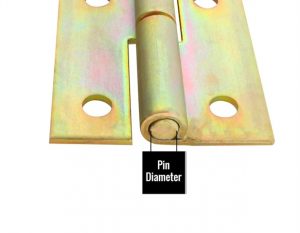
Pin Diameter –The diameter of the pin is very important because this will determine how much weight the hinge can bear. For a stronger hinge, a bigger diameter is needed.
Side Play – The degree of a slight perpendicular movement between the leaves and the pin. If the pin is gripped to tight by the curl of the leaves the hinge won’t rotate.
End Play – The degree of axial movement between the leaves. This small gap between the knuckles allows the leaves to rotate with ease.
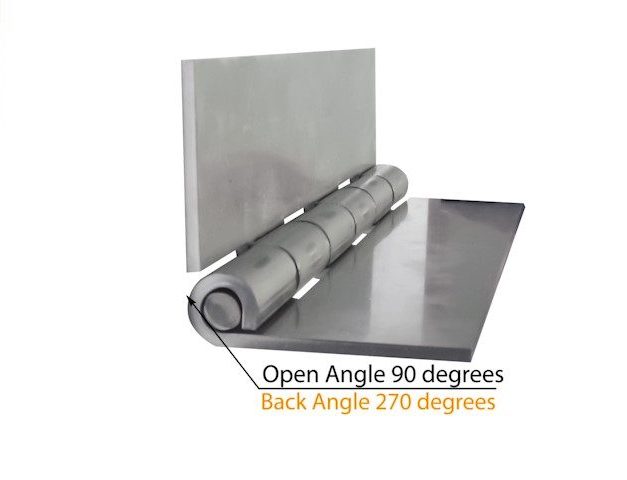
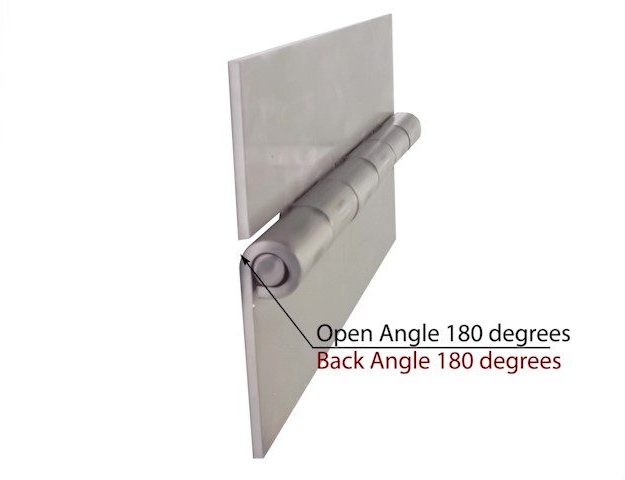
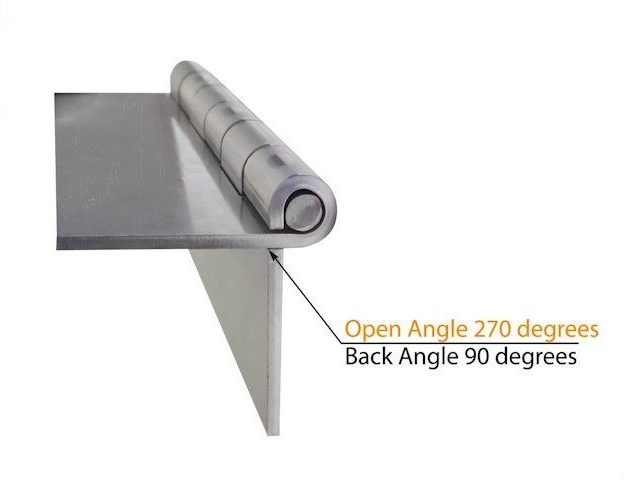
Back Angle – Back angle is the opposite of open. It refers to the angle between the leaves away from the knuckles.
Open Angle – Open angle refers to the angle between the leaves from the knuckle side.
Angles